Lately I’m reminded that, while many of the animals that arrive on our doorstep are either strays, or surrendered to us by their owners, a significant number fall into a grey area we can only categorize as “other”.
The most common version of “other” is when a tenant abandons an animal after leaving their property or after being evicted. Most of us cannot imagine leaving our furry family members behind, but it happens with more frequency than you might imagine and when it does, we don’t have an established path to intake the animal. In Ontario, animals are still considered property, so ownership is a critical principle. Whether it’s municipal animal control officers, animal welfare inspectors or the KHS Customer Care team, establishing ownership is essential as to whether we can accept the animal and how we proceed. In almost every instance, the owner must transfer the animal to the KHS before we can provide care. In the case of a tenant leaving their pet behind, the owner is gone but the landlord is in the difficult position of finding appropriate care and housing. Of course, the landlord does not have ownership or the resources to care for abandoned animals, so their first call is often to our office. When we explain that we need the owner to surrender, they turn to animal control, but animal control is limited to dealing with strays, so landlords then call animal welfare inspectors. Inspectors can only address mistreatment or abuse. It’s at this point that the landlord returns to us; exasperated and frustrated. We understand this response and since our overarching mission is to advocate for and improve the lives of animals in our community we take them in, despite the inability to label them as a “stray” or as an “owner surrender.”
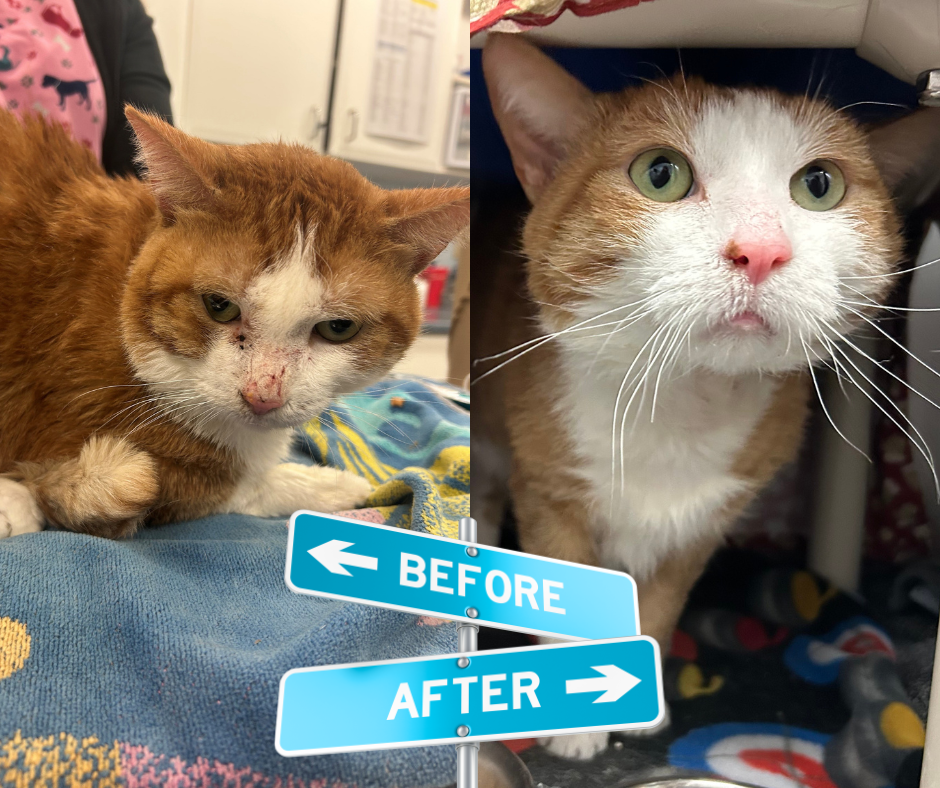
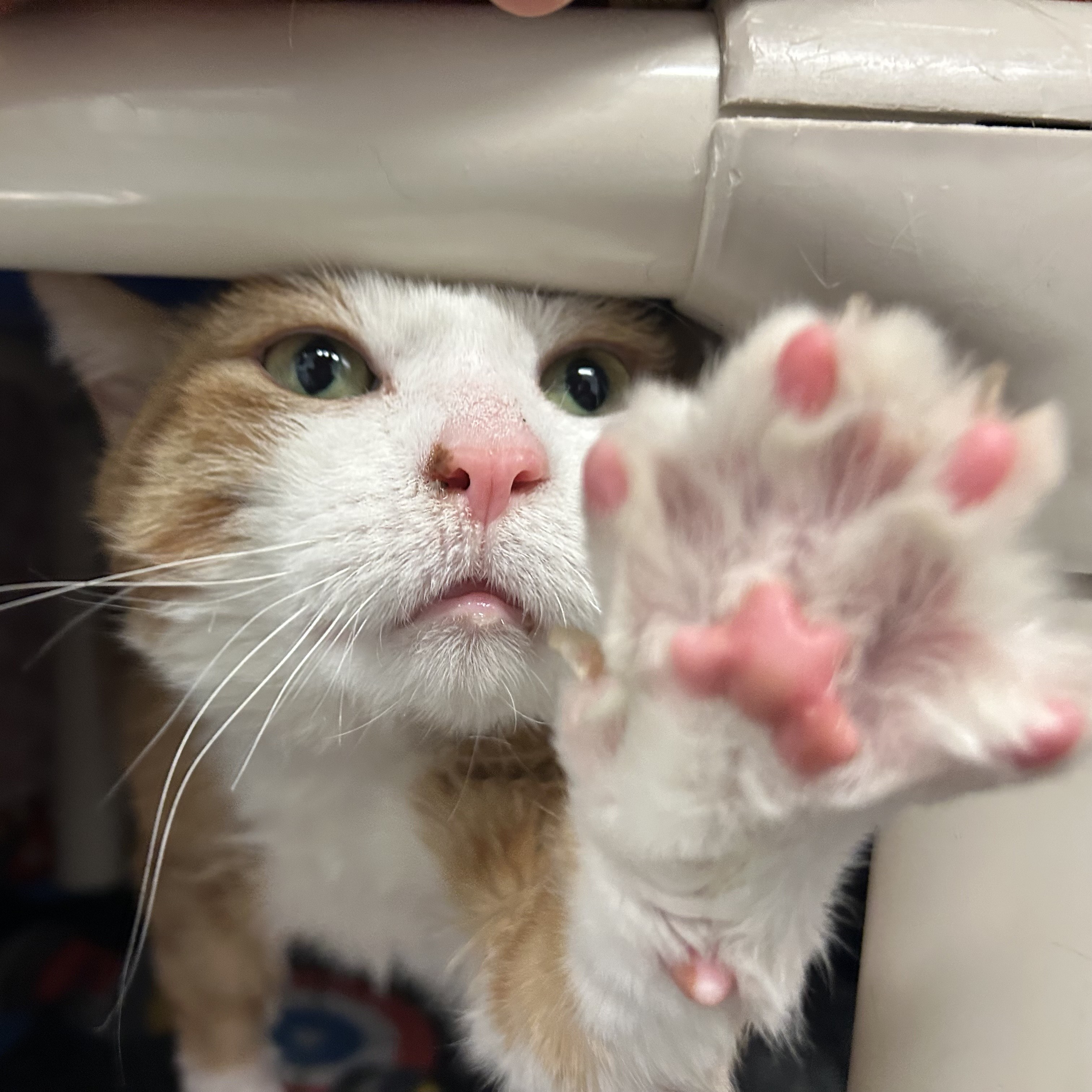
Juicebox was one of those cats that fell squarely into this grey area. Abandoned in a rental property along with five other cats, he was a mess. Along with being dehydrated and malnourished he was understandably terrified. We took them all into our care, and our veterinary team went to work right away. For the other five cats, we didn’t’ need to do much. They were vaccinated and made ready for adoption. For Juicebox the situation was much more dire. We put him on fluids and tried to find something he would eat. Despite all our attempts, we could not stimulate his appetite, so we put him on a feeding tube. This is often a last-ditch effort to save malnourished animals. It requires a surgical procedure to insert a tube into the neck that goes directly down into the stomach. Our technicians and assistants then carefully syringe food into the tube in an effort to get some nourishment on board. It’s a painstaking process that is not always successful. With Juicebox, we got lucky. Once his body started to accept and process the nutrients, he got stronger and began to eat on his own. We continued to monitor his progress and removed the tube. This is the critical step. Once that tube is removed, if the cat doesn’t continue to eat on its own, it’s unlikely we can do the procedure again. We all waited anxiously until he started taking those first few bites. Success! Juicebox was on the road to recovery and put up for adoption in late December. On January 4th, he found his forever home with adopter Asia-Lily and continues to thrive with his new family. "He has really come out of his shell," she said. "He always wants to cuddle, play, talk to us, and escort us around the house.”
We succeed more than we fail in every category of animal welfare – even when that category doesn’t really exist. How do we do that? This team of animal welfare professionals is the most committed and compassionate group of women and men I’ve ever been associated with. They are experts at finding workarounds to any obstacle placed between them and rehoming abandoned, abused, neglected or mistreated animals and I’m proud to call them my colleagues and my friends.